Why Keeping Your Xero Bookkeeping Up to Date Matters for Your Business
If your Xero bookkeeping is three months behind, you might think, “I'll catch up when I have time.”
The problem is that your business doesn't stop while your bookkeeping is waiting.
You're still making decisions. You're still paying suppliers, sending invoices, taking on work, hiring people and spending money.
The question is: are you making those decisions using current information, or information from three months ago?
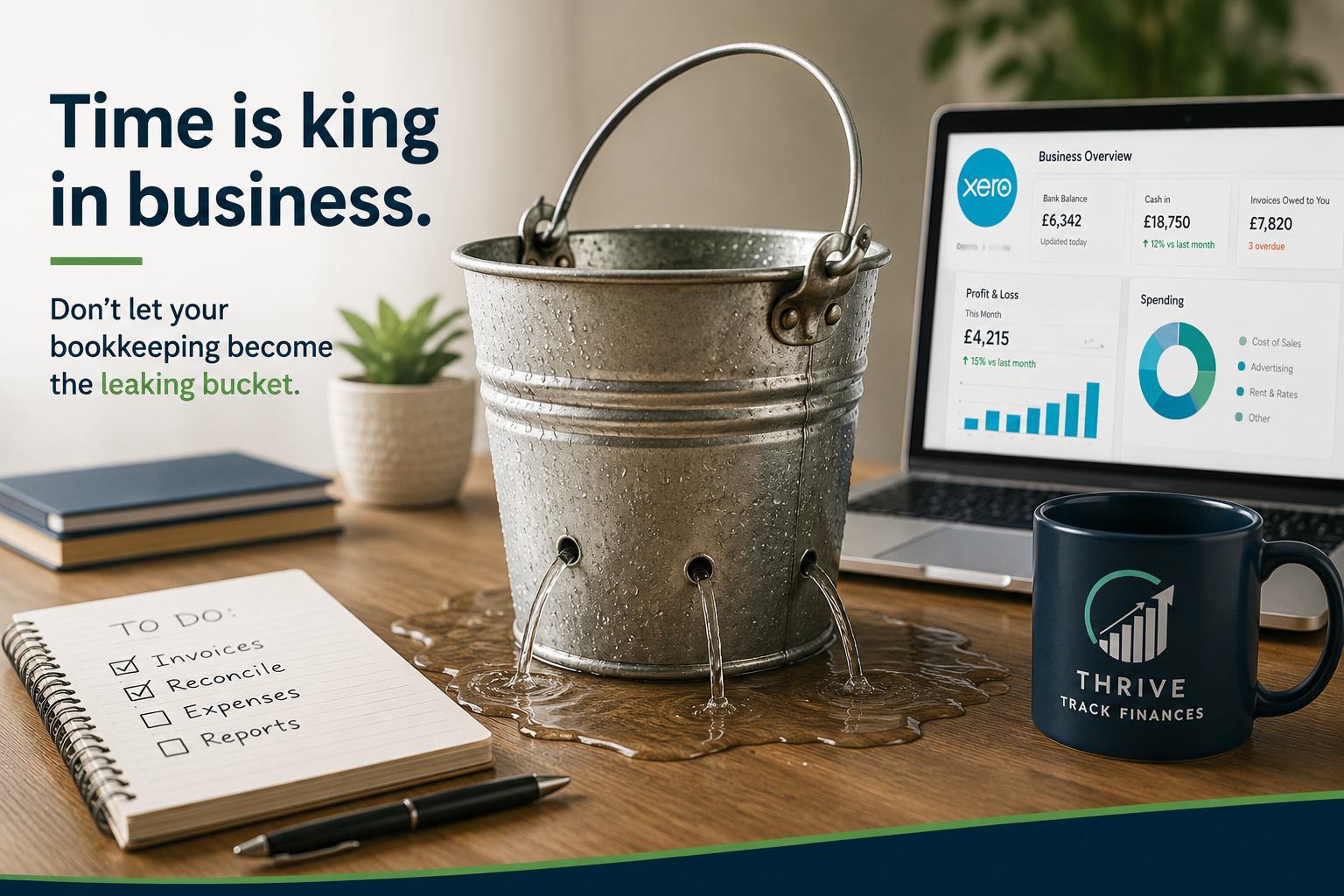
I like to think of bookkeeping as a bit like a leaking bucket. If you spot the leak early, it's usually easy to fix. Leave it for long enough and you've got a much bigger mess to deal with.
Your Xero bookkeeping works in much the same way.
Your bookkeeping isn't just for your accountant
Many business owners see bookkeeping as something they need to do for their accountant at year-end.
But your accounts should be helping you run your business throughout the year.
When your Xero is up to date, you can start to answer important questions:
Are we actually making money?
Which customers still owe us money?
What bills are coming up?
How much cash do we really have available?
Are our costs increasing?
Can we afford to hire someone?
Can we afford to buy that new van or piece of equipment?
Are we on track with our targets?
If your bookkeeping is months behind, you don't have the information to answer these questions confidently.
Good information is only useful when you have it on time
This is probably the biggest reason I believe keeping Xero up to date matters.
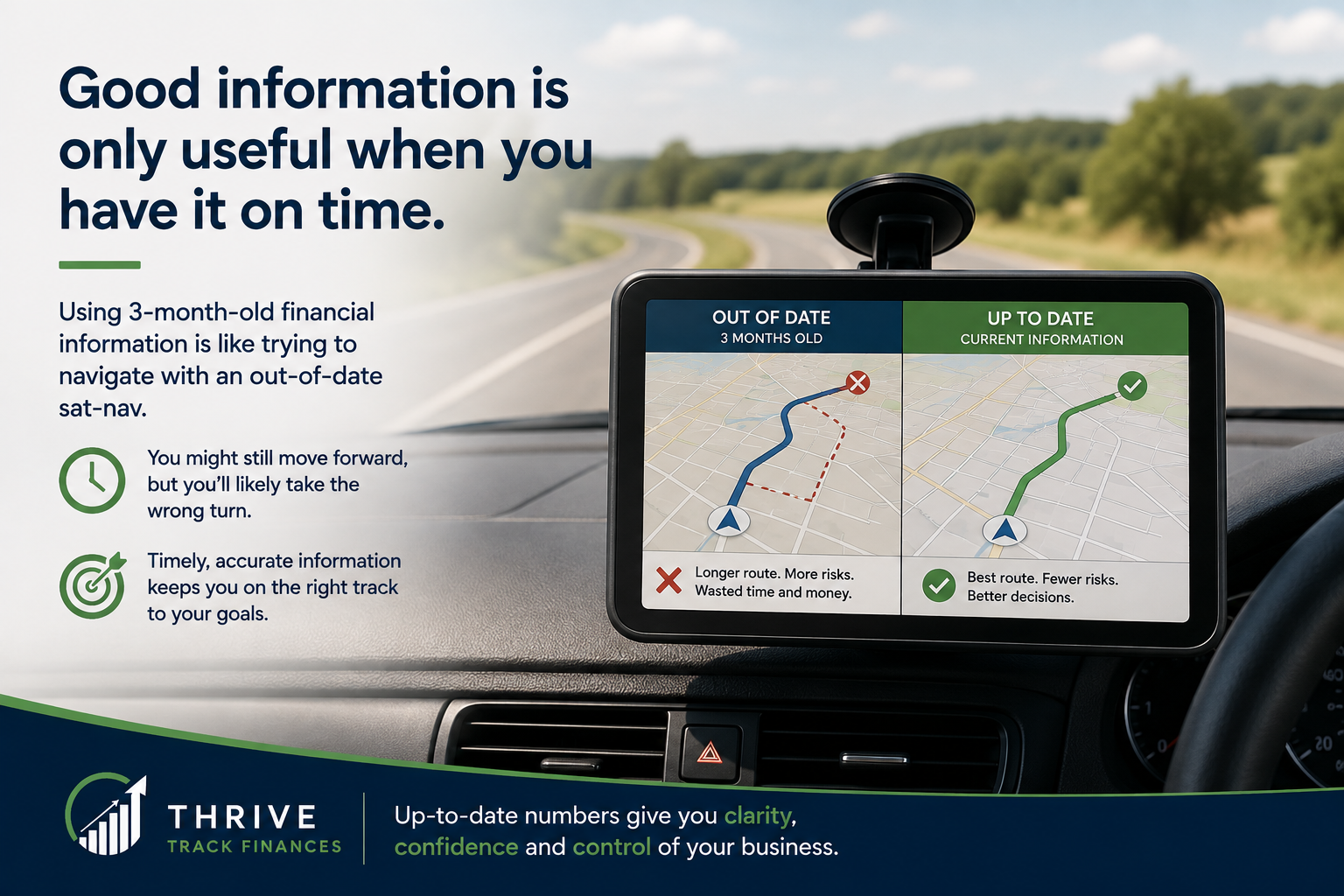
Imagine you're driving somewhere you've never been before, but your sat-nav is showing where you were three months ago.
You might eventually get there, but you're not exactly making decisions based on where you are now.
Business finances are similar.
Your accounts are there to give you a picture of what's happening in your business.
But if the information is old, the picture is old.
And old information can lead to poor decisions.
Profit is important, but cash matters too
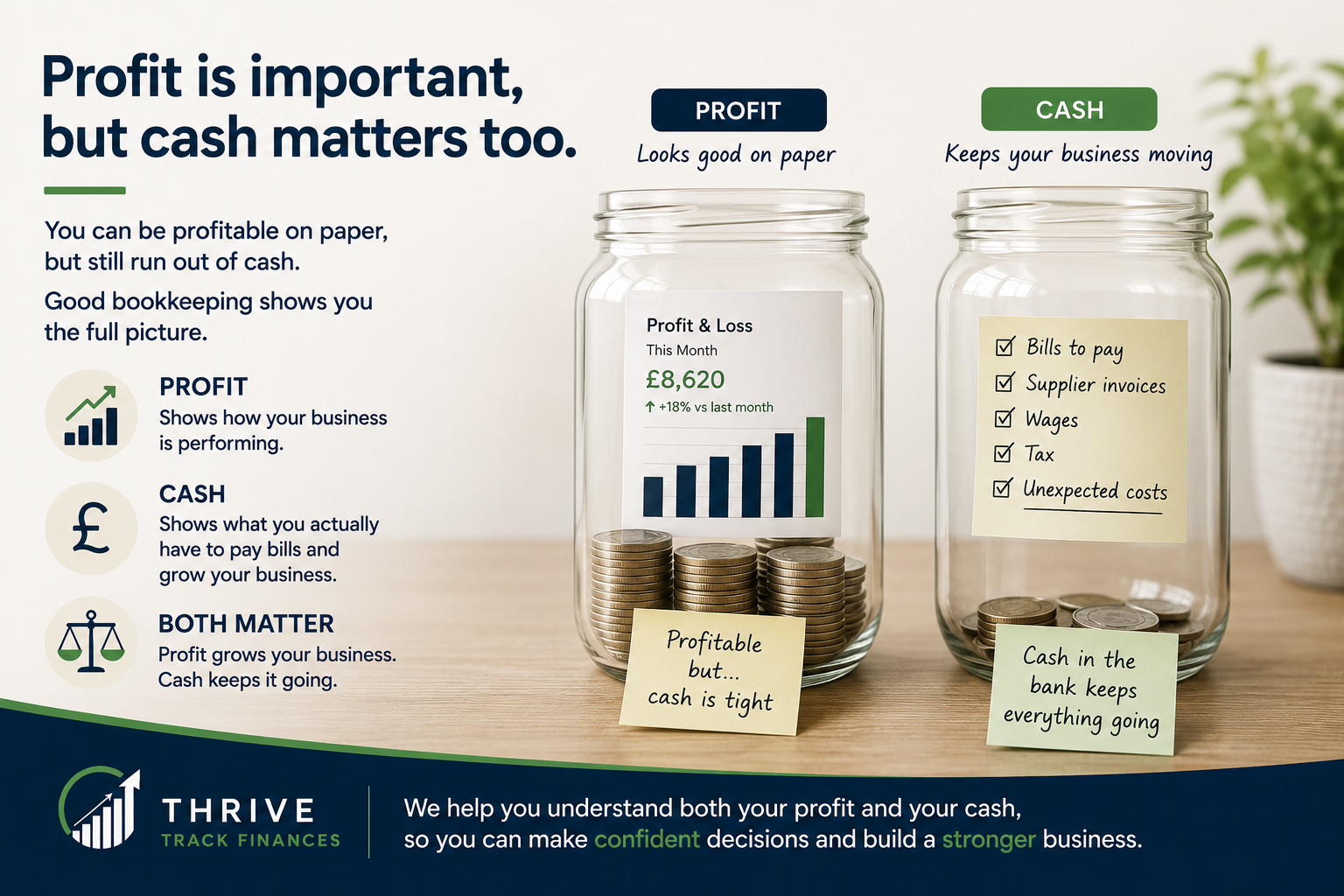
One of the most common misunderstandings in business is thinking that profit and cash are the same thing.
They're not.
You could have £30,000 of unpaid customer invoices and your accounts might show that you've made a healthy profit.
But if your customers haven't paid you, that money isn't available in your bank account.
At the same time, you might have VAT, tax, suppliers, wages or other expenses waiting to be paid.
This is why keeping your bookkeeping current is so important.
It gives you a much clearer picture of both performance and cash flow.
We'll explore the difference between cash and profit in more detail in a future Tuesday Finance Tip, because it's something every business owner should understand.
Xero can make life easier — but only if you use it properly
Xero is a powerful accounting platform, but it doesn't magically run your finances for you.
Bank feeds can bring transactions into Xero.
Invoices can be sent and tracked.
Receipts can be captured digitally.
Reports can be produced in seconds.
But the information still needs to be reviewed, categorised and reconciled correctly.
A beautifully designed dashboard isn't very useful if the information behind it is wrong.
That's why I always see bookkeeping as more than simply entering transactions.
It's about making sure the financial information you're looking at is reliable.
What happens when bookkeeping falls behind?
Usually, nothing dramatic happens on day one.
That's what makes it dangerous.
A few unreconciled transactions become a few dozen.
A forgotten invoice becomes a late payment.
A missed expense gets forgotten.
A VAT deadline gets closer.
Then suddenly you're trying to understand six months of transactions in one weekend.
The longer you leave it, the harder it becomes to understand what actually happened.
And by then, you can't go back and make the decision you should have made three or four months earlier.
Up-to-date bookkeeping helps you spot problems earlier
Let's say your monthly expenses suddenly increase by £2,000.
If your Xero is up to date, you can investigate it quickly.
Maybe a supplier increased their prices.
Maybe a subscription has been duplicated.
Maybe you've taken on additional costs for a new project.
Or maybe it's completely normal.
The important thing is that you can see it.
The same applies to falling sales, overdue invoices or changes in profitability.
The earlier you see something, the more options you usually have.
It's back to that leaking bucket: catching a small problem early is usually much easier than dealing with the consequences later.
It also makes growth easier
Growth sounds great.
More customers.
More employees.
More equipment.
Bigger contracts.
But growth creates more moving parts.
If your bookkeeping is already disorganised when the business is small, it generally doesn't become easier when the business gets bigger.
Good financial processes give you a stronger foundation for growth.
Before taking on a new employee, investing in new equipment or making another major commitment, you want to understand what your numbers are telling you.
Growth should be based on good information, not guesswork.

You don't necessarily need to do the bookkeeping yourself
This is something I understand.
Business owners are busy.
A builder or electrician wants to be completing jobs.
An e-commerce business owner wants to focus on customers, products and sales.
A startup founder wants to focus on building and growing the business.
Bookkeeping is important, but that doesn't mean the business owner needs to spend their evenings doing it.
Sometimes the most valuable thing you can do is make sure someone reliable is keeping your Xero up to date and giving you information you can actually use.
So, how often should you update Xero?
There isn't one answer that works for every business.
A small business with relatively few transactions may be perfectly comfortable with monthly bookkeeping.
A larger or faster-moving business may benefit from more frequent updates.
The important thing is consistency.
Don't wait until your accountant asks for the books.
Your accounts should be useful to you throughout the year, not just at year-end.
My simple rule
I like to keep it simple:
“If you wouldn't make an important business decision using information from three months ago, don't let your bookkeeping be three months behind.”
Your Xero doesn't need to be perfect every second of the day.
But it should be accurate, organised and up to date enough for you to understand what's happening in your business.
Because ultimately, bookkeeping isn't just about keeping HMRC or your accountant happy.
It's about giving you the information you need to run your business.
Need help keeping your Xero up to date?
At ThriveTrack Finances, I help businesses in Erith, Belvedere and surrounding areas keep their Xero bookkeeping organised and their financial information up to date, with remote support also available across the UK.
If you're spending too much time catching up on your books or simply don't have the time to keep on top of them book a free consultation and let's have a chat about how I can help.
